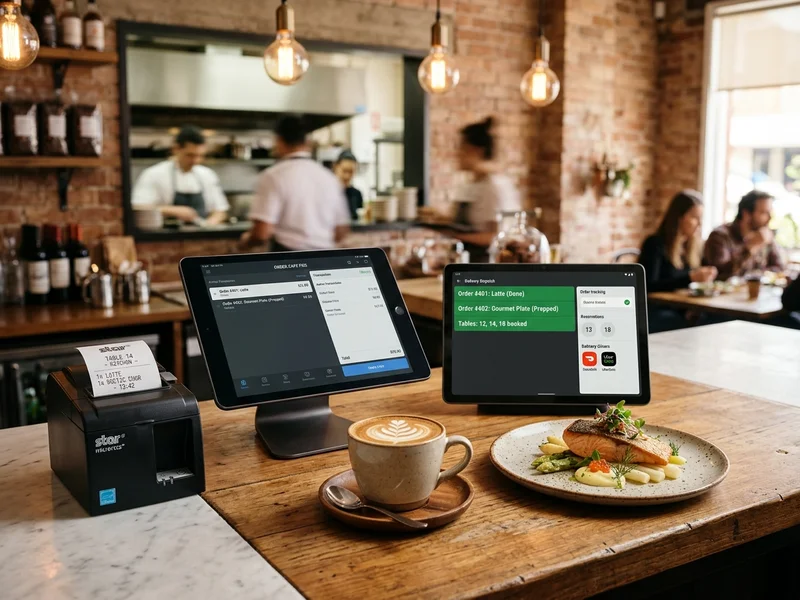
What a food business website should do
People look at a food website for four things: what is on the menu, how much it costs, where you are and how to order. If any of these is hard to find, they move to the next listing. We build food websites around those four questions, with large photos, clear prices, a visible order button and a map, all loading quickly on mobile data.
Restaurants, cafes and direct online ordering
Restaurants and cafes
For a restaurant or cafe, the site usually includes:
- A categorised menu with photos and prices that you can edit in a minute
- Opening hours, location, directions and table reservation
- Offers, events and links to your reviews
- A layout from our website designing team that matches your brand
Direct ordering and aggregator apps: how they fit together
Aggregator apps bring customers, but their commissions are often reported to fall somewhere between 18 and 30 percent of the order value, depending on the plan. On a low-margin dish, that can wipe out the profit. They also keep the customer's details. A direct ordering website or app lets you keep more of each order and build your own customer list for offers and repeat orders.
Most businesses do not need to drop aggregators completely. A practical approach is to use them for discovery and nudge regulars towards your own ordering page, with a small benefit such as free delivery or a discount on direct orders.
Direct ordering and aggregator apps compared
| Point | Direct ordering | Aggregator app |
|---|---|---|
| Commission | Payment gateway fees only | Often reported at roughly 18 to 30 percent |
| Customer details | Yours | Mostly the app's |
| Branding | Your own look | Shared listing |
| Reach | Builds gradually | Ready audience |
How online ordering works
- The customer picks items and options such as size or spice level
- They choose pickup or delivery and pay, or select cash on delivery
- The order reaches your dashboard with an alert
- You accept it, set a preparation time and update the status
- The customer gets confirmation by email or WhatsApp
Delivery, pickup and payments
We set up delivery rules that suit how you work: delivery zones by area or pincode, minimum order values, delivery charges and time slots. You can use your own riders or connect to courier services where it makes sense. Customers pay by UPI, card or netbanking through payment gateway integration, and cash on delivery can be allowed with an order confirmation step to avoid fake orders.
Delivery setup checklist
- Delivery areas by pincode or distance
- Minimum order value and delivery charges
- Preparation time shown before payment
- Own riders or a courier partner decided
- A call or WhatsApp number for late orders
QR menus and table reservations
QR menu only
When to choose a QR menu
- Cafes that want an always-updated menu
Limits of a QR menu
- No online orders
Full online ordering
When to choose online ordering
- Restaurants that take pickup and delivery orders
Limits of online ordering
- Needs delivery rules and kitchen workflow
Table booking can be added to either option for peak hours and group bookings.
Sweet shops, multi-branch outlets, cloud kitchens and caterers
Sweet shops, bakeries and packaged food brands
Food that travels needs extra planning. A sweet shop selling pedas or dry fruits across India has to think about shelf life, packaging that survives a long journey and courier partners that reach small towns. Shops in places like Deoghar, where local sweets already have a name outside the town, are a good fit for online selling. We build online stores with these details in mind, and we place your FSSAI licence number on the site as required. More ideas are on our ecommerce and retail page.
Multi-branch restaurants and franchises
If you run more than one outlet, each branch may have its own menu, prices, timings and delivery area. We build an outlet locator so customers choose the nearest branch, while you manage everything from a central admin. Branch managers can update stock and availability for their own outlet without touching the others.
Cloud kitchens and multi-brand setups
Cloud kitchens often run several brands from one kitchen. We can build separate menus and landing pages for each brand while managing orders in a single dashboard, with reports by brand, item and time of day. That makes it easier to see which brand earns the most and which dishes slow the kitchen down.
Caterers and event food services
Caterers sell trust and planning rather than single dishes. A good catering website shows sample menus, package options, past events, a quote request form and a guest count calculator. If you also serve weddings or corporate functions, our event website work may be useful.
Loyalty, offers and brand content
Loyalty, offers and repeat orders
Repeat customers are the most profitable ones. With a direct ordering system you can add loyalty points, coupon codes, birthday offers and an order again button that fills the cart with a previous order in one tap. A short WhatsApp message with a link to reorder often works better than any paid ad, because it reaches someone who already likes your food.
Photos, menu writing and brand voice
Food sells with the eyes first. Sharp, natural photos of your actual dishes beat stock images every time. Short, honest descriptions that mention ingredients, portion size and spice level help guests choose and cut down on complaints. Our content writing team can write menu descriptions, about pages and blog posts in a tone that fits your brand.
Menu page checklist
- Real photos of your actual dishes
- Clear prices and portion sizes
- Veg and non-veg marks, allergens and spice level
- Delivery area, timings and contact number
- Updated stock and offers each week
Visibility and common mistakes
Local SEO, reviews and WhatsApp marketing
Most orders begin with a search such as best biryani near me or cake shop in Deoghar. To appear, you need a verified Google Business Profile, correct timings and phone number, menu and location pages, steady reviews and a fast site. Our SEO services handle these, social media optimization keeps your profiles active, and WhatsApp marketing lets you send offers and order updates to customers who have agreed to receive them.
Mistakes food businesses make online
- Uploading the menu as a PDF or an image that cannot be searched, copied or ordered from
- Showing old prices and dishes that are no longer served
- Offering delivery with no clear area, charges or timing
- Ignoring reviews, which are often the first thing a new customer reads
- Giving customers no reason to order directly instead of through an aggregator
Timelines and pricing
A restaurant or cafe website with a menu and reservations usually takes one to two weeks. A full ordering system with payments, delivery rules and an admin panel typically takes three to six weeks. We share itemised quotes with no hidden charges. If you are launching a new food brand, our page for startups explains how we plan a lean first version.